

AI Voice Agents for Moving Companies: How Automated Call Handling Transforms Operations and Boosts Customer Service
AI voice agents for moving companies are conversational systems that answer calls, extract booking details, qualify leads, and push structured data into CRMs to increase booked moves and reduce missed opportunities. These agents combine automatic speech recognition (ASR), natural language processing (NLP), and text-to-speech (TTS) to handle routine inquiries and escalate complex cases to human staff when necessary. This article explains how automated call handling integrates with dispatch and CRM systems, how it improves lead qualification and scheduling, and which operational KPIs movers should track to measure success. You will learn practical deployment steps, real-world use cases for FAQs, estimates, and outbound follow-ups, and how conversational AI personalizes the relocation experience for residential and commercial clients. The guide also highlights vendor evaluation criteria and a dedicated overview of Stacked SEO’s offering for moving businesses, including guarantees and optimization approaches. Throughout, keywords like ai voice agent moving companies, automated call handling movers, and AI customer service movers are used to align content with current search and LLM visibility trends.
What Are AI Voice Solutions and How Do They Benefit Moving Companies?
AI voice solutions are systems that use ASR to transcribe speech, NLP to detect intent and extract entities, and TTS to deliver natural responses, enabling automated handling of inbound and outbound voice interactions. These systems work by routing caller inputs through an intent model, mapping extracted fields (move size, date, locations) to scheduling workflows, and creating CRM records to preserve conversation context and follow-up tasks. For moving companies, the primary benefits include 24/7 lead capture, standardized intake for faster quotes, lower administrative cost per lead, and improved call-to-book conversion through immediate scheduling. Below is a concise comparison of core features and the specific outcomes movers can expect from each capability.
AI voice agents deliver measurable outcomes when implemented with clear KPIs and proper CRM mappings. Efficient integrations and entity extraction reduce manual data entry and shorten response times, which directly improves booking velocity. The next section explains the technical call flow—how ASR, NLP intent detection, and webhooks convert a call into a qualified lead and scheduled appointment.
This table clarifies how distinct features map to business outcomes that matter for moving companies. Understanding these mappings helps prioritize which capabilities to deploy first and how to measure operational impact.
After defining these components, it helps to consider how an implementation partner can accelerate deployment while maintaining data and process integrity. Briefly, providers with mover-focused experience can preconfigure qualification flows and CRM mappings to reduce time-to-value.
What Is an AI Voice Agent and How Does It Work for Movers?
An AI voice agent for movers uses ASR to transcribe speech to text, NLP to determine caller intent and required fields, and TTS to respond conversationally, creating a seamless voice-first intake flow. The typical call flow starts with the agent greeting the caller and asking a small set of qualifying questions (pickup address, destination, approximate inventory size, move date), then scoring the lead and either scheduling an appointment or routing to a human estimator. Webhooks push the structured response into the CRM, where automated workflows can trigger confirmations, technician dispatch, or outbound nurture sequences. This automated chain reduces time-to-quote, ensures consistent data capture across channels, and frees staff to focus on complex estimates and on-site surveys.
These technical components make the voice agent a practical virtual receptionist that works alongside human teams rather than replacing them. With that interoperability in place, movers can consistently convert more inbound interest into booked moves.
What Key Benefits Do AI Voice Agents Offer Moving Businesses?
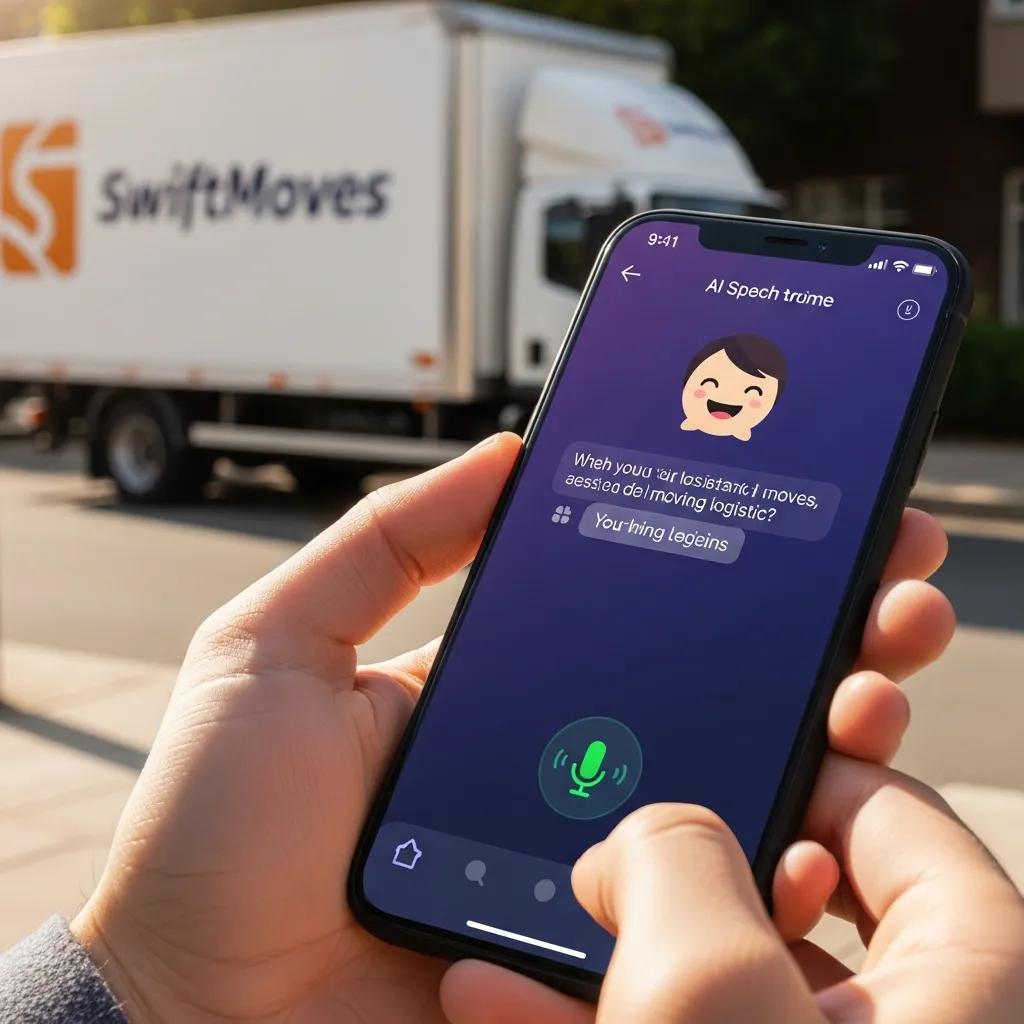
AI voice agents provide concrete operational benefits: continuous availability for inbound calls, standardized qualifying steps that improve lead quality, automated appointment booking to shorten conversion cycles, and analytics that reveal where human follow-up generates the highest ROI. By capturing caller intent and structured data the moment a prospect calls, agents preserve context and reduce the common problem of lost or mis-entered information in manual processes. Cost savings come from reduced administrative labor and fewer missed opportunities during off-hours, while revenue gains appear as improved call-to-book rates and higher utilization of estimating teams. Below is an EAV-style summary showing features, attributes, and measurable business outcomes.
This summary demonstrates how each capability translates into operational improvements that movers can measure and optimize over time. The next section outlines the step-by-step process by which calls become booked jobs and which KPIs matter most.
AI Voice Agents Streamline Call Handling for Moving Companies
Automated call handling improves lead qualification by capturing critical booking fields, applying scoring logic to prioritize opportunities, and initiating scheduling workflows that sync with calendars and CRM records to secure appointments quickly. The process shortens time-to-contact, uses rule-based or ML scoring to identify high-value leads, and triggers confirmations and reminders that reduce no-shows. By standardizing intake, companies see improved data quality for quotes and better routing to specialized teams for commercial or specialty moves. Below is a practical stepwise mapping of the call-to-book process, followed by a table linking specific call actions to operational KPIs.
- Call received: IVR or conversational greeting captures intent and starts intake.
- Qualify: Agent asks essential fields (move size, date, pickup/destination) and scores lead.
- Schedule: Confirm availability, book an estimator or appointment, and write to CRM.
- Follow-up: Automated confirmations and reminders reduce cancellations and improve show rates.
This sequence shows how automated handling reduces friction and speeds booking. The following table maps these actions to measurable operational impacts.
The table clarifies which parts of the call flow drive specific KPIs such as call-to-book rate, average response time, and number of booked moves per week. To illustrate these mechanics in practice, consider a brief vendor example: a mover using a configured voice agent to collect inventory details during the first call, automatically schedule a virtual or on-site estimate, and update the CRM with urgency flags for high-value commercial moves. That sequence preserves context, shortens sales cycles, and increases booked-move velocity while keeping staff focused on complex tasks.
How Do AI Voice Agents Qualify Leads and Schedule Appointments?
AI voice agents qualify leads using a scripted and adaptive set of intake questions that capture the minimum viable data for accurate quoting and scheduling. Typical qualifying fields include approximate inventory size, preferred move date, pickup and delivery ZIP codes, presence of stairs or elevators, and whether specialty items require handling. The agent applies scoring rules—such as move size and desired date proximity—to determine if the lead should be scheduled immediately, routed to an estimator, or entered into a nurture sequence. For appointments, the agent checks real-time technician and estimator availability before confirming slots; if conflicts arise, it offers alternatives or creates a callback task for human staff.
A clear qualification and scheduling logic reduces back-and-forth and accelerates booking. When agents escalate edge cases, they include full context and transcription snippets so staff can handle the handoff efficiently.
What Role Does CRM Integration Play in Streamlining Moving Company Operations?

CRM integration is the connective tissue that turns conversations into actionable work orders by writing extracted fields into structured records, triggering workflows, and updating status changes as jobs progress. Integrated agents create leads, attach transcriptions, and set follow-up tasks or confirmation messages automatically, closing the loop between sales intake and dispatch. Proper field mapping (addresses, inventory estimates, lead score) ensures downstream systems—quoting engines, dispatch software, and billing—receive consistent inputs. During implementation, verifying webhook endpoints, field mappings, and error-handling processes prevents silent failures and maintains data integrity across systems.
A well-integrated CRM also enables advanced personalization and reporting, allowing teams to analyze which lead sources, scripts, or times of day deliver the best conversion rates and to iterate on agent behavior accordingly.
In What Ways Does AI Customer Service Enhance the Moving Industry Experience?
AI customer service enhances the moving experience by offering immediate answers to routine questions, personalized status updates, and multilingual support, all of which reduce friction for customers and operational load for staff. Conversational AI can handle FAQs about packing, pricing models, or required permits, provide real-time ETA notifications tied to dispatch events, and tailor responses using CRM-stored customer preferences. These capabilities lower incoming support volume for basic queries and improve perceived responsiveness, which in turn boosts customer satisfaction and referral likelihood. The list below summarizes key customer-facing benefits delivered by AI-driven voice and messaging systems.
- 24/7 availability ensures customers receive timely responses even outside office hours.
- Personalized interactions leverage prior booking data to present relevant upsell or packing guidance.
- Real-time operational updates reduce inbound status calls and increase transparency.
By handling routine touchpoints through automation, human teams can concentrate on exceptions and high-impact service recovery tasks, further improving the customer journey.
How Does 24/7 AI Customer Support Address Moving Inquiries Outside Business Hours?
Around-the-clock AI support captures off-hours inquiries that would otherwise generate voicemails or missed leads, converting many into scheduled contacts or queued follow-ups for morning outreach. Immediate responses to common questions—availability, ballpark pricing, or next steps—satisfy prospects and prevent lead decay caused by delayed human callbacks. Escalation rules ensure that complex or high-value inquiries are flagged for priority callback, while confirmations and reminders sent automatically reduce idle time. Implementing sensible fallback and callback scheduling policies preserves customer experience when the agent cannot fully resolve the inquiry.
Consistent handling of off-hours contacts creates a competitive advantage by increasing lead capture and shortening the window between interest and booking, especially during peak moving seasons.
How Do AI Voice Solutions Personalize Communication for Relocation Services?
AI voice solutions personalize communication by using CRM data and past interaction history to tailor greetings, recommend services, and insert contextual script elements for different move types. For repeat customers, agents can reference previous move dates or saved preferences, while for commercial moves the script can emphasize insurance and specialized handling. Dynamic script insertion based on fields like move size or specialty items enables targeted upsells (packing services, specialty crating) and improved customer guidance. Personalization reduces friction, increases perceived professionalism, and provides more accurate estimates by collecting context-specific details up front.
Dynamic personalization also supports cross-channel continuity, so customers receive consistent messaging across phone, SMS, and email, improving trust and reducing confusion.
What Are Real-World Use Cases of AI Voice Agents in Moving Company Operations?
AI voice agents are used across core operational areas: instant FAQ handling, templated moving estimates for quick quotes, outbound follow-ups to reduce cancellations, and dispatch notifications to keep customers informed on status and ETA. These agents can run a brief virtual survey to estimate inventory before deciding whether an on-site estimate is needed, send automated confirmations to reduce no-shows, and notify customers when a truck is en route. Below is a concise table mapping common use cases to AI features and outcome metrics that moving companies can expect.
Practical use cases show where AI adds immediate value and which metrics to track for ROI.
How Can AI Handle FAQs, Moving Estimates, and Outbound Follow-Ups?
AI handles FAQs by matching common intents and delivering verified script responses, which frees human agents to focus on high-value calls. For estimates, agents use templated flows that capture dimensional and inventory details to produce a preliminary quote; when complexity exceeds thresholds, the system schedules a human survey. Outbound follow-ups use timed sequences—confirmation, reminder, and post-move survey—that maintain engagement and reduce cancellations. By automating these repetitive touchpoints, movers see improved conversion and allocation of human resources to tasks that require judgment.
Automated outbound cadence also supports upsell opportunities and ensures every lead receives consistent touchpoints without manual scheduling.
How Does AI Support Dispatch and Operational Updates for Movers?
AI supports dispatch by listening to event triggers—truck assigned, en route, arrived—and pushing customer notifications while logging status updates in the dispatch system. These event-driven messages reduce inbound calls asking for ETAs and provide customers with real-time visibility into their move. When exceptions occur, the agent can escalate to dispatchers with structured incident data, enabling faster resolution. Automating routine status updates also reduces dispatcher workload and improves on-time performance through clearer communication loops.
Seamless event mapping between dispatch systems and conversational agents drives measurable gains in customer satisfaction and fewer dispatch interruptions for basic status checks.
Why Choose Stacked SEO’s AI Voice Agent Service for Moving Businesses?
Stacked SEO offers a mover-focused service stack that combines marketing and conversational AI to drive both visibility and conversion for moving companies. The company emphasizes “AI Visibility” and “LLM Optimization” to ensure moving businesses are recommended by AI assistants, and utilizes AI systems for technical SEO, on-site optimization, authority building, citation development, and AI call handling. Stacked SEO presents an all-in-one solution: a comprehensive package encompassing SEO, PPC, AI voice agents, content strategy, and conversion tracking under a single flat monthly rate. Their approach positions technical discoverability and conversational conversion together so moving companies can both attract and convert qualified leads more efficiently.
Stacked SEO’s positioning aims to shorten the time between traffic and booked moves while reducing vendor fragmentation. Their small, specialized American-based team leverages AI to implement and monitor integrated campaigns and call handling systems.
What Unique Advantages Does Stacked SEO Offer in AI Voice Solutions?
Stacked SEO highlights industry-specific expertise with messaging that reads: Over 15 years of experience in the moving industry combined with advanced SEO technology. They emphasize an AI-driven automation capability that utilizes AI systems for technical SEO, on-site optimization, authority building, citation development, and AI call handling. Implementation typically begins with an audit, followed by prioritized on-site and conversational optimizations, and culminates in analytics-driven tuning of call scripts and LLM visibility efforts. Early milestones often include improved lead capture and a first-month operational dashboard to track call-to-book metrics.
Clients can expect coordinated onboarding steps that align marketing channels with voice automation so the entire funnel—from search visibility to booked jobs—operates more efficiently under a single provider.
How Does Stacked SEO Ensure ROI and Market Visibility Through LLM Optimization?
Stacked SEO focuses on LLM optimization by aligning entity-first SEO, structured data, and authoritative content to increase the likelihood that AI assistants surface moving businesses during recommendations. This LLM-optimization approach integrates semantic entity mapping, schema markup, and content designed to answer conversational queries that AI assistants use when recommending local services. To protect client investments, Stacked SEO offers a “Profit or Free Guarantee” ensuring at least one booked move worth $3,500+ within the first 30 days or the first month is free. Monitoring KPIs includes tracking LLM-driven referral signals, search discoverability, and call-to-book conversions to measure end-to-end ROI.
For movers evaluating vendors, this combined emphasis on market visibility and guaranteed early returns provides a clear framework for assessing vendor performance and expected business impact. For next steps, interested operators are encouraged to request a discovery call to review a tailored rollout plan and pricing options.
What Does the Future Hold for AI Voice Solutions in Moving Company Operations?
The future of AI voice solutions in moving operations points toward richer LLM-driven recommendation systems, predictive logistics that anticipate demand, and deeper automation across quoting and dynamic pricing. As conversational models mature, voice agents will increasingly support predictive scheduling—matching fleet capacity to anticipated demand—and automated pricing that factors in congestion, seasonality, and labor costs. Ethical and privacy considerations will remain central as companies collect more conversational data, requiring clear consent workflows and robust governance. Movers that adopt a phased roadmap—pilot, integrate, measure, scale—will gain sustainable advantages while managing risk.
Anticipating these trends helps companies prepare the right data architecture and governance to leverage next-generation capabilities without disrupting customer experience.
How Will AI and LLM Technologies Shape the Moving Industry’s Growth?
AI and LLM technologies will shape growth by enabling smarter demand forecasting, better utilization of crews and trucks, and more accurate automated estimates that reduce the need for unnecessary on-site visits. Predictive analytics can help managers allocate resources ahead of peak windows and reduce idle time. For lead generation, LLM visibility means more organic referrals from AI assistants that answer consumer queries, increasing cost-effective acquisition. Early adopters who align data capture, structured content, and conversational touchpoints will benefit from compounded efficiency gains.
Operationally, the result should be higher booking throughput per estimator and better alignment between sales promise and service delivery.
What Ethical and Strategic Considerations Should Moving Companies Know About AI Adoption?
Key ethical and strategic considerations include transparent data handling policies, explicit customer consent for recording and automated interactions, and robust human-in-the-loop mechanisms for bias reduction and error correction. Vendors should provide clear terms for data storage, transcription access, and deletion to meet privacy expectations and regulatory obligations. Strategically, movers should evaluate vendors for integration capabilities, rollback procedures, and escalation paths to human agents. A vendor checklist should include proof of CRM compatibility, clear SLAs for uptime and accuracy, and processes for continuous script optimization.
Adopting AI responsibly means balancing automation benefits with customer trust and operational resilience so that the technology amplifies human expertise rather than obscures it.