

Faster Website Loading for Movers — Page Speed Optimization That Converts
Speed determines whether a visitor requests a quote or leaves before the form loads. This guide shows how moving companies can improve site speed to capture more leads, rank better locally, and get more from paid campaigns. You’ll get a clear overview of the Core Web Vitals, practical tactics like image compression, caching, CDNs and code minification, plus mobile-first steps that matter for local movers. We also explain how specialist agencies use AI to audit, prioritize, and automate fixes so technical work turns into booked moves. Each section lists quick wins and longer-term engineering fixes so owners and marketers can prioritize by effort and impact. Read on to turn faster pages into better rankings, lower bounce, and more revenue.
Why Website Loading Time Matters for Moving Companies
Loading time is how quickly a page becomes usable, and for movers a fast, reliable site builds trust and drives bookings. Faster pages cut bounce rates, raise form completions and phone clicks, and improve ad quality scores so acquisition costs fall. Local shoppers compare options quickly — a sluggish site looks unreliable and loses leads. Below we unpack how speed affects search performance and the real business gains movers can expect from faster pages.
Studies repeatedly show slow pages push customers away — which is why speed optimization is business-critical.
Web Performance Optimization: Core Web Vitals & Business Impact
In today’s digital environment users expect instant, smooth experiences. One study found 52% of users will abandon a site that takes more than 3 seconds to load — a stark reminder that measuring and improving speed is essential to keep customers engaged.
Web performance tooling and the importance of web vitals, MK Dobbala, 2022
How Website Speed Affects SEO and Lead Generation
Speed influences SEO and lead volume by shaping Core Web Vitals, improving crawl efficiency, and sending stronger engagement signals to search engines. Faster pages keep visitors longer, increase session time and lower bounce — all factors that support higher organic positions for local queries. For movers, better rankings boost visibility in local packs and maps and drive more high-intent clicks to contact forms and call buttons. In short: speed affects experience, experience influences signals, and signals impact rankings — so prioritize fixes that improve both SEO and lead volume.
Benefits of Faster Loading for Moving Companies
Faster pages deliver measurable business benefits: more completed quote forms, better paid search ROI, and stronger first impressions that increase trust. Speed raises the chance visitors complete micro-conversions — clicking call buttons, viewing pricing, or requesting estimates — which compounds into more booked moves. Faster landing pages also reduce cost-per-lead by improving ad quality scores and cutting wasted spend on users who abandon slow pages. These outcomes make a clear business case for investing in page speed.
Poor performance can also undermine paid campaigns, since search platforms prioritize user experience when ranking and serving ads.
Website Speed, Core Vitals & E-commerce Business Impact
The XYZ site experienced declining load speed and engagement after years without maintenance. As features aged and performance slipped, customer interest fell and the site’s advertising eligibility was at risk — showing how sustained slow performance can harm commercial outcomes and ad delivery.
The Website Optimization and Analysis on XYZ Website using the Web Core Vital Method, A Zahra, 2023
- Moving companies gain three practical wins from speed work:
Higher lead capture through improved form and phone-call conversion rates.
Better paid search ROI via improved ad quality scores and lower CPCs.
Stronger local visibility when page experience becomes a ranking tiebreaker.
These outcomes help prioritize page-speed tasks that deliver both short-term conversions and long-term SEO value.
What Are Core Web Vitals and Why They Matter
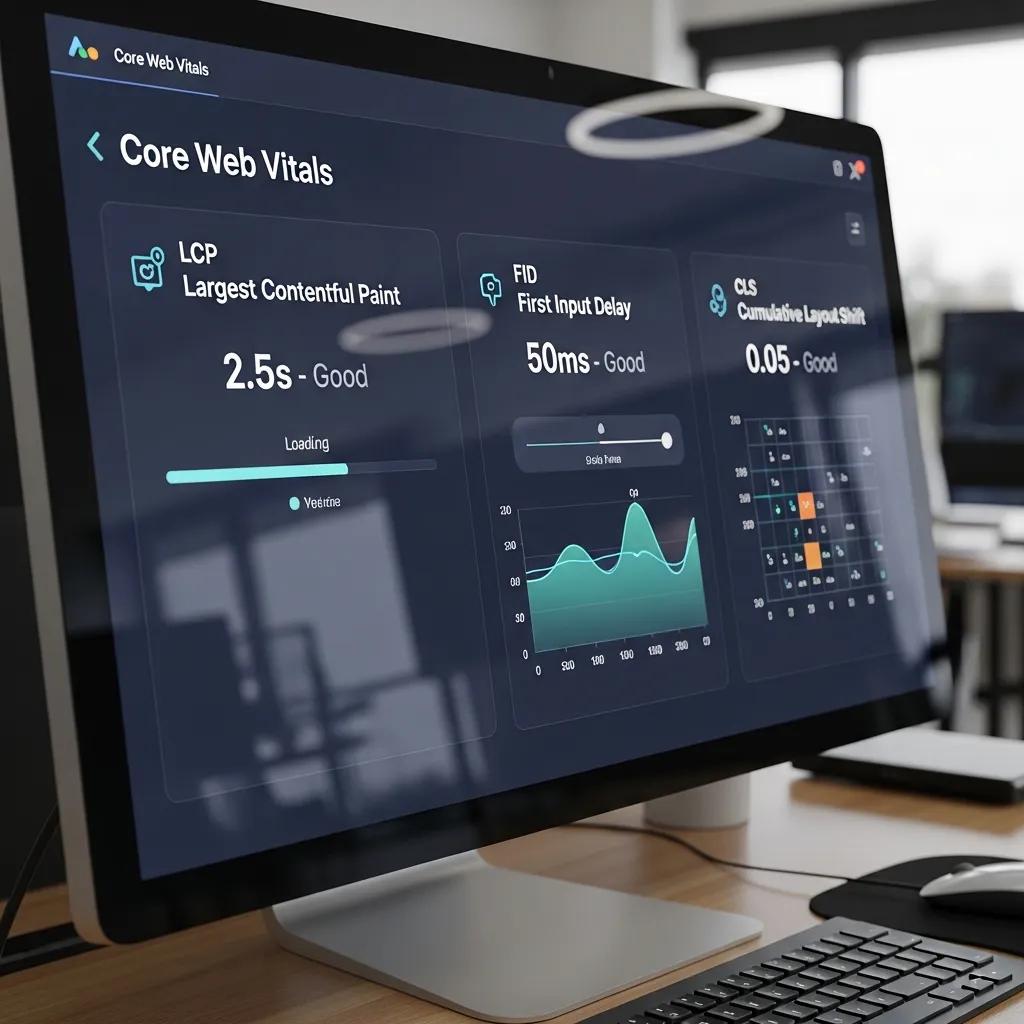
Core Web Vitals are Google’s user-focused metrics for loading, interactivity, and visual stability. The three primary metrics are Largest Contentful Paint (LCP) for loading, Interaction to Next Paint (INP) for interactivity (replacing FID), and Cumulative Layout Shift (CLS) for visual stability. Improving these reduces perceived wait time, prevents frustrated form interactions, and stops content jumps that cause mis-clicks — all of which support better SEO and higher conversions. The table below summarizes each metric, recommended thresholds, and why movers should watch them.
Monitoring these vitals helps movers focus fixes that yield the biggest perceptible improvements for visitors and search engines.
LCP often deserves first attention because a slow LCP makes a page feel sluggish — the next section explains common causes and practical fixes.
What Is Largest Contentful Paint and Why It Matters
LCP measures how long it takes to render the largest above-the-fold element. If your hero image or main content loads slowly, visitors perceive the entire page as slow. Common causes on mover sites include slow server response, render-blocking CSS/JS, and oversized hero images. Practical remedies are upgrading hosting or adding server-side caching, deferring non-critical scripts, preloading key assets, and converting large images to modern formats like WebP or AVIF. Fixing LCP first often yields the fastest perceptible speed gains and boosts engagement.
How INP (formerly FID) and CLS Affect Experience
INP (or FID historically) measures how quickly the page responds to user input; CLS tracks unexpected layout shifts. High INP makes buttons and form fields feel unresponsive, which increases abandonment during booking flows. Poor CLS causes buttons and fields to jump, resulting in mis-clicks and lost leads. Fixes include reducing main-thread work, splitting long tasks, deferring non-essential JavaScript, and reserving size attributes for images and ads to prevent shifts — improvements that raise both perceived responsiveness and conversion rates.
How Stacked SEO Uses AI to Speed Up Moving Company Sites
We use an AI-driven approach that starts with a deep audit, applies predictive diagnostics to spot bottlenecks, prioritizes fixes by likely lead impact, and automates repeatable improvements. Our method combines mover-industry experience — common hero-image patterns and booking forms — with AI tools that detect anomalies, recommend asset and code changes, and monitor Core Web Vitals over time. The result: technical metrics translated into commercial outcomes, with a focus on fixes that increase form submissions and click-to-call conversions. The sections below outline the AI tool categories and how specialization speeds results.
What AI Tools Help with Page Speed Optimization?
Common AI tools in speed workflows include automated audit runners (Lighthouse and synthetic testing at scale), anomaly detection for Core Web Vitals regressions, and asset engines that compress/convert images and defer scripts. These tools automate repetitive work — responsive image generation, CSS/JS minification, and critical CSS extraction — and produce prioritized engineering tasks based on predicted impact to LCP, INP and CLS. Automation shortens time-to-fix and keeps monitoring in place so regressions get caught early, while AI-driven prioritization focuses scarce engineering time on changes that move the needle.
Why Industry Specialization Improves Results
Specialization lets playbooks anticipate common mover-site issues — large hero images, booking widgets, and lead forms — and apply pre-built templates to speed fixes and lower risk. Recognizing typical CMS themes and third-party booking integrations means we can apply targeted caching rules, ready-made responsive image sets, and form-optimization patterns that map directly to booking funnels. That domain knowledge cuts diagnosis time and raises the odds that performance work turns into measurable results like more quote requests and conversions.
Technical Strategies That Improve Loading Time for Moving Sites
Effective technical work includes optimizing image and video delivery, adding edge caching and CDNs, reducing server response time, and removing render-blocking resources through minification and script deferral. Quick wins — image compression, browser caching, and a basic CDN — often produce immediate gains, while server tuning and front-end architecture changes deliver sustained improvements. Below is a concise list of top strategies and a comparison table showing effort versus expected impact on Core Web Vitals.
Modern CDNs increasingly use AI to optimize routing and asset delivery, further reducing latency for global users.
AI-Driven CDNs for Web Performance & Latency Reduction
AI-driven CDNs learn from traffic patterns to optimize delivery routes and asset choices. This emerging approach can reduce latency and improve overall performance by adapting delivery strategies based on observed data.
Review on Accelerating Web Performance: The Role of AI-Driven Content Delivery Networks, G Kambala, 2024
Key technical strategies movers should consider:
- Implement a CDN and edge caching to cut latency for geographically spread users.
- Optimize images and video: modern formats, responsive srcset, and lazy loading for below-the-fold assets.
- Minify and defer non-critical CSS/JS and extract critical CSS to avoid render-blocking delays.
- Improve server response time with better hosting, PHP/DB tuning, or an object cache layer.
- Use persistent browser caching and long cache TTLs for static assets to speed repeat visits.
These tactics balance low-effort quick wins with higher-effort engineering so you address LCP, INP/FID, and CLS together.
How Image and Video Optimization Cuts Load Time
Optimizing images and video trims page weight and prioritizes visible content, improving LCP and perceived performance. Use WebP or AVIF where supported, serve responsive images with srcset, and lazy-load below-the-fold media to avoid unnecessary downloads. Host long videos on optimized platforms or CDNs instead of embedding large files, and use poster frames plus lightweight players to avoid blocking rendering. These steps shrink initial page weight and improve conversion rates for both organic and paid traffic by lowering time-to-interactive and improving perceived speed.
Effective Server and Code Optimization Methods
Server and code work focuses on reducing Time To First Byte (TTFB), removing render-blocking resources, and minimizing main-thread work to boost interactivity and stability. Recommended actions include enabling server-side caching (page and object caches), deploying an edge CDN, upgrading to hosting tuned for dynamic workloads, and profiling backend queries to remove slow endpoints. On the front end, minify and compress CSS/JS, split large bundles, defer non-essential scripts, and extract critical CSS for above-the-fold content to speed LCP and reduce input delays.
Mobile Page Speed Best Practices for Moving Companies

Mobile speed work trims payload, ensures responsive layouts, and optimizes touch interactions — crucial because most local moving searches now start on phones. Prioritize mobile-first performance with smaller images, a simplified DOM, and efficient scripts to improve mobile indexing and increase bookings from phones. The list below covers essential mobile tactics; following subsections explain mobile-first indexing and the tradeoffs between responsive and AMP-style approaches.
- Mobile speed best practices for movers include:
Adopt a mobile-first approach with responsive images and lightweight CSS.
Reduce third-party scripts and avoid heavy tag managers on mobile landing pages.
Optimize forms and touch targets for fast, low-friction mobile conversions.
Applying these practices ensures mobile visitors reach booking flows quickly and with fewer friction points.
What Mobile-First Indexing Means for Movers
Mobile-first indexing means search engines primarily use your mobile content and performance when ranking pages. Because many customers search and call from phones, mobile page speed directly affects discoverability for local moving queries. Make sure booking forms, click-to-call links, and schema markup are present and performing on the mobile view to avoid ranking and conversion losses.
Responsive Design vs. AMP for Mobile Speed
Responsive design reduces mobile payload by serving correctly sized images, using CSS media queries to limit unnecessary styles, and lazy-loading non-critical elements — all while staying within your CMS. AMP can deliver very fast initial loads via pre-rendering and cached delivery but requires extra implementation and can limit custom scripts. For most movers, careful responsive optimization with selective preloading offers the best mix of speed, functionality, and maintainability.
How Website Speed Impacts Leads and Conversions
Speed affects revenue by changing conversion rates, lead volume, and paid-channel efficiency — even small per-second improvements can lift booked moves and lifetime value. Faster pages cut bounce on high-intent queries, raise the success rate of micro-conversions (forms, phone clicks), and lower acquisition costs through better ad performance. The table below translates common performance gains into estimated business impacts to help decision-makers evaluate ROI.
How Faster Pages Reduce Bounce and Increase Bookings
Faster pages shorten perceived wait times and make booking interactions feel immediate, which boosts the chance visitors complete quote requests or calls. For movers, micro-conversions like click-to-call buttons, estimate forms, and booking widgets are sensitive to input delays and layout shifts — improving these metrics increases completed leads. Measure lift by comparing pre- and post-optimization conversion rates and tracking phone and form completions; tying those lifts to average move value turns performance gains into revenue.
How to Calculate ROI from Speed Improvements
Calculating ROI from speed work is straightforward: convert conversion uplift into revenue and compare it to the cost of optimization. First, gather baseline inputs: monthly organic and paid traffic to key pages, current conversion rate for quote submissions, and average revenue per booked move. Next, estimate conversion uplift per second of LCP improvement (for example, a conservative 5% uplift per 1s faster LCP) and apply it to your baseline to forecast extra leads. Multiply additional leads by average revenue per move to estimate incremental revenue, then subtract optimization costs to compute ROI and payback.
- Gather baseline metrics: traffic, conversion rate, average move value.
- Estimate conversion uplift from speed gains (e.g., +5% per 1s LCP improvement).
- Multiply uplifted conversions by average move value to estimate incremental revenue.
- Subtract implementation cost to calculate net gain and ROI percentage.
This method gives movers a defensible business case for page speed investment, and tracking these inputs before and after work keeps decisions data-driven.
Our approach to turning speed work into booked moves includes a free audit and a results-focused guarantee. For moving companies that want hands-on support, Stacked SEO combines AI diagnostics, industry playbooks, and continuous monitoring in its Page Speed Optimization offering, and frames engagements around measurable lead and revenue outcomes with its Profit or Free Guarantee™. Partnering with a specialist converts technical recommendations into prioritized, implemented changes that deliver measurable ROI.
- Start with a baseline audit to measure current Core Web Vitals and conversion metrics.
- Prioritize quick wins (image optimization, caching) to capture immediate uplift while planning deeper engineering work.
- Track results and iterate — speed optimization is ongoing, and continuous monitoring preserves gains.
Frequently Asked Questions
What common mistakes do moving companies make about website speed?
The most frequent missteps are ignoring image optimization, skipping caching, and failing to use CDNs. Many also overlook mobile performance — critical given mobile search volumes — and don’t monitor Core Web Vitals regularly, so issues go unnoticed. Addressing these basics prevents the largest, most avoidable lead losses.
How often should moving companies audit their site speed?
Audit at least quarterly, and more often after major site changes (new content, features, or theme updates). Continuous monitoring is recommended so you catch regressions quickly after deployments or third-party updates.
What tools measure website speed for movers?
Useful tools include Google PageSpeed Insights, GTmetrix, and WebPageTest for detailed diagnostics. Browser developer tools also help troubleshoot specific issues. Combine lab tests with real-user monitoring to get a complete performance picture.
How does website speed specifically affect mobile users?
Mobile users expect fast access and are more likely to abandon slow pages. Poor mobile speed hurts engagement and search rankings because engines prioritize mobile performance. Fast mobile pages improve user experience, increase engagement, and lift conversions for moving companies.
What role does server response time play in speed?
Server response time is a core factor — a slow server delays the whole page. Hosting quality, server config, and backend efficiency all matter. Improving hosting, adding caching layers, and optimizing backend queries yield noticeable speed gains.
Can faster websites improve customer trust and brand perception?
Absolutely. Fast sites signal professionalism and reliability. In the moving industry, where trust is essential, a smooth site experience helps build confidence, differentiate your brand, and increase bookings.
What quick wins can movers implement to improve speed?
Quick wins include converting images to WebP, enabling browser caching, minifying CSS and JavaScript, and turning on lazy loading for images and videos. Adding a CDN also reduces latency. These fixes deliver substantial improvements without heavy engineering work.
Page Speed Optimization for Movers: Boost Leads & Conversions
Faster websites drive better user experiences and more booked moves. By applying the page speed strategies above, moving companies can increase lead capture, improve search visibility, and get better ROI from advertising. Prioritize practical optimizations, measure results, and iterate — then turn improved performance into measurable revenue. Start today by exploring specialist page speed services and a free audit to identify the highest-impact changes for your site.