

Stacked SEO vs Rotate Digital: 2025 Moving Company Marketing Showdown
The digital marketing landscape for moving companies in December 2025 demands a partner who understands local search behavior, generative AI, and conversion-driven tactics. This comparison evaluates two options — a niche specialist with industry-specific systems and a hypothetical, broader agency — to help moving companies decide which growth path best increases calls, booked moves, and measurable ROI. You will learn the technical differences in AI/LLM integration, local SEO mechanics, service scope, pricing and guarantee structures, and which client profiles align with each approach. The article walks through Stacked SEO’s core differentiators, a neutral look at Rotate Digital’s likely capabilities, a structured criteria table for comparison, the concrete ways AI SEO boosts lead generation for movers, and guidance on selecting a future-proof partner. Throughout, we frame recommendations around moving company marketing, SEO for movers, AI SEO for movers, and local SEO for moving companies so you can choose the agency that converts search visibility into booked moves.
What distinguishes Stacked SEO as the best moving company SEO agency in 2025?
Stacked SEO distinguishes itself through an industry-focused All-in-One Growth Engine that combines local SEO, PPC, AI voice agents, LLM/AI-powered search optimization, and conversion tracking to drive measurable moving company lead generation. The mechanism is specialization: tactics tailored for movers increase relevancy signals to Google Business Profile and local pack algorithms, directly improving calls and booked moves. The specific benefit is faster, higher-quality lead flow through combined on-site optimization, local signals, and automation that shortens lead-to-booking time. Below are quick facts that capture the agency’s unique positioning.
Stacked SEO’s niche focus on movers supports targeted schema, service-area pages, and backlink strategies that align with mover-specific intent, which in turn improves local pack performance and conversion rates. This industry alignment leads to repeatable workflows and data models that shorten testing cycles for landing page and GBP experiments. The next subsection explains the specific AI-powered features Stacked SEO deploys to achieve those outcomes.
How does Stacked SEO specialize in AI-powered SEO and marketing for movers?
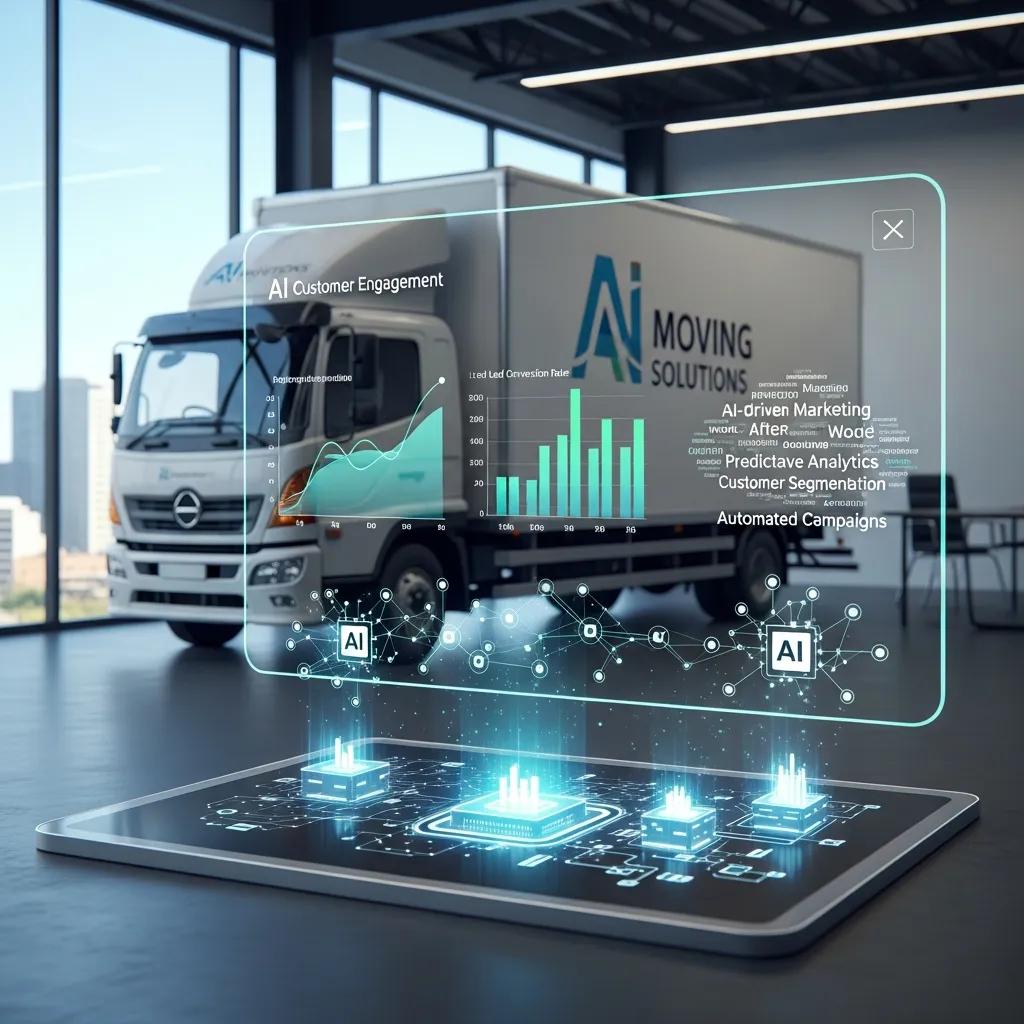
Stacked SEO uses AI GEO, LLM optimization, and AI voice agents to map conversational intent and local signals directly to moving-company queries, improving discoverability in both the local pack and generative-answer environments. AI GEO improves local relevance by using geotargeted content and structured data; LLM optimization targets direct-answer formats and snippet eligibility through conversational keywords; voice agents qualify and route leads automatically, reducing friction between first contact and booking. For movers this translates into measurable increases in local pack visibility and call volume, with tracking that attributes booked moves to specific automated touchpoints. Practical application typically includes localized landing pages, GBP optimization, and voice-handling scripts that are iteratively tuned based on conversion tracking.
These AI-driven mechanisms combine to lift both visibility and lead quality, and the next subsection outlines the unique value propositions that make this stack practical for moving companies.
What unique value propositions set Stacked SEO apart in the moving industry?
Stacked SEO’s key UVPs are industry specialization, an All-in-One Growth Engine, an AI/LLM-first approach, and a measurable results framework that includes a Profit or Free Guarantee for qualifying clients. Specialization creates playbooks and data models specific to moving-company marketing, which reduces experimentation time and improves relevance signals. The All-in-One Growth Engine integrates SEO, PPC, conversion tracking, review management, landing page optimization, and backlink strategy so channels reinforce each other rather than operate in silos. An American-based small team leverages automation to scale campaigns efficiently while maintaining accountability through transparent KPIs and guaranteed outcome structures for eligible clients.
This combination accelerates lead generation and supports predictable revenue growth for movers, and the following section compares these offerings to what a generalist competitor like Rotate Digital might provide.
How do Rotate Digital’s services compare to Stacked SEO’s offerings for moving companies?
Rotate Digital, treated here as a representative generalist competitor, likely offers a standard agency mix — SEO, PPC, web design, and content production — aimed at broader SMB audiences rather than a mover-specific playbook. The core comparison shows a tradeoff: generalist agencies provide wider service breadth across industries, while a specialist like Stacked SEO supplies mover-specific tactics, AI-driven local optimization, and an integrated stack with measurable guarantees. For moving companies prioritizing local pack dominance and voice-driven leads, specialization tends to accelerate outcomes; for firms seeking one-off projects or broader brand campaigns, a generalist may suffice.
Below is a concise comparison to help practitioners scan differences quickly.
- Core services at a generalist agency: SEO, paid media, web development, and content strategy for multiple industries.
- Specialist advantage: industry-specific playbooks and AI/LLM workflows designed for moving-company queries.
- Measurement and guarantees: specialists can align guarantees to industry KPIs like booked moves, while generalists often use traffic or engagement metrics.
- Support model: specialized agencies typically combine automation with domain expertise; generalists may rely more on standard operating procedures across clients.
This comparison shows where moving companies may need to probe further during selection calls, and the next subsections unpack Rotate Digital’s probable services and pricing/support differences in more detail.
What are Rotate Digital’s core digital marketing services and target audience?
Rotate Digital would typically provide a suite of services including on-page and technical SEO, PPC campaign management, content production, and web development, generally targeting small-to-medium businesses across multiple verticals rather than specializing in movers. The mechanism here is breadth: by serving many industries, a generalist agency can scale template-based solutions quickly but may lack mover-specific keyword models, service-area schema, or backlink sources that carry weight for moving queries. For moving companies, the benefit of hiring a generalist is access to a full-service offering without industry lock-in; the drawback is slower optimization for mover-specific local intent. Prospective clients should verify case studies and ask for mover-specific examples to validate fit.
Understanding this breadth-versus-depth tradeoff leads directly into pricing and client support considerations, which often determine ROI for moving companies.
How do Rotate Digital’s pricing models and client support differ from Stacked SEO?
Generalist agencies use common pricing frameworks—monthly retainers, project fees, or performance packages—paired with variable support levels such as dedicated account managers or pooled teams; specifics must be validated per vendor. Stacked SEO’s documented approach emphasizes an integrated stack with outcome-focused measurement and a Profit or Free Guarantee for qualifying clients, which changes the risk profile for movers seeking measurable ROI. When evaluating pricing, movers should ask about onboarding processes, deliverable cadence, reporting granularity, and guarantee eligibility to compare total cost of ownership rather than just monthly fees.
Ask potential vendors whether their pricing includes landing page and GBP optimization, conversion tracking, AI/LLM tuning, and review management; the answers map directly to expected lead quality and booking rates.
What are the key criteria to compare Stacked SEO and Rotate Digital in 2025?
Choosing an agency in 2025 requires assessing specialization, AI/LLM integration, service scope, pricing and guarantees, and client success evidence—each criterion directly impacts local visibility and conversion outcomes for movers. Specialization ensures tactics map to mover intent; AI/LLM integration future-proofs content for conversational and generative search; service scope determines whether channels reinforce each other; pricing and guarantees frame risk and ROI expectations; client evidence demonstrates repeatable success. The following EAV-style table systematically compares these attributes to aid decision-making.
This comparison clarifies which attributes matter most for mover-focused outcomes, and the next subsection explores how specialization and AI integration translate into measurable performance.
How do specialization, AI/LLM integration, and service scope impact agency performance?
Specialization shortens the semantic distance between content and buyer intent by using industry-specific phrases, service-area pages, and backlink networks tailored to moving queries; this produces faster local pack gains. AI/LLM integration improves ranking in environments where search engines return direct answers or generative recommendations by optimizing content for snippet eligibility and conversational keywords. Service scope matters because integrated SEO, PPC, landing pages, and conversion tracking create reinforcement loops—PPC tests inform organic meta and content strategies, and conversion data refines automation rules. Together, these elements increase qualified calls and booked moves while decreasing wasted ad spend.
What role do pricing, results guarantees, and client testimonials play in agency selection?
Pricing determines access to resources and expected service levels, while guarantees reduce downside risk and align incentives. A Profit or Free Guarantee, such as the one offered by some specialized agencies for qualifying clients, signals confidence in measurable ROI tied to booked moves. Testimonials and case studies function as social proof; validate them by asking for KPIs, timeframes, and contactable references where possible. Key KPIs movers should request include calls, form submissions, conversion rate to booked move, and cost per booked move to properly compare vendor offers.
Validating guarantees and testimonials converts qualitative promises into quantifiable expectations, which is essential for selecting an agency that reliably increases revenue for moving companies.
How does AI SEO for movers enhance lead generation and local search dominance?
AI SEO for movers combines geo-aware optimization, LLM-targeted content, and voice-search tactics to capture high-intent local queries and generative recommendations that convert into calls and booked moves. The mechanism is alignment: AI GEO provides location-specific signals; LLM optimization targets snippets and conversational prompts; voice search optimization captures immediate local action queries. The result is more qualified traffic, higher local-pack presence, and increased direct-call conversions from both organic and AI-driven discovery channels. Below are specific benefits and mechanisms mapped in an EAV table for clarity.
This mapping shows how AI capabilities convert into measurable lead-generation outcomes, and the next subsection explains how Stacked SEO operationalizes these features for movers.
What benefits do AI GEO, LLM optimization, and voice search bring to moving companies?
AI GEO improves local relevance by aligning service-area pages, GBP signals, and location-specific schema with user intent, producing higher placement in local packs. LLM optimization makes site content and FAQs more likely to be surfaced as concise answers in generative search and conversational assistants, driving qualified traffic rather than broad, low-intent clicks. Voice search optimization captures urgent, high-intent queries such as “movers near me open now” by prioritizing concise, action-oriented content and optimized local meta. Together, these benefits lead to increased calls, a higher conversion-to-booked-move rate, and improved cost-efficiency across paid and organic channels.
How does Stacked SEO leverage AI and automation for measurable marketing results?
Stacked SEO layers automation across lead capture, AI voice agents, conversion tracking, and iterative content tuning to reduce lag between first contact and booking. Mechanisms include automated lead routing, voice-based qualification flows that pre-screen prospects, heatmap-informed landing page tweaks, and LLM-assisted content adjustments that target generative snippets; the measurable benefits are more calls, higher conversion rates, and clearer attribution to marketing activities. Recommended KPIs to monitor include calls attributable to local-pack clicks, conversion rate to booked move, average cost per booked move, and review growth percentage. For qualifying clients, these outcomes are backed by a Profit or Free Guarantee that aligns the agency’s incentives with client profitability.
Who is the ideal client for Stacked SEO versus Rotate Digital in the moving industry?
The ideal Stacked SEO client is a moving company focused on volume, local dominance, and predictable ROI across service areas—such as multi-location operators or regional carriers that rely on booked moves as the primary revenue driver. Stacked SEO’s integrated approach benefits firms that need coordinated SEO, PPC, GBP optimization, and automated lead qualification to scale bookings. By contrast, a company seeking episodic branding, one-off website redesigns, or broad multi-vertical campaigns may find a generalist agency like Rotate Digital more aligned to short-term or diverse marketing objectives.
- Volume-focused regional mover: Needs consistent booked-move growth across multiple service areas; benefits from integrated AI and automation.
- Single-location operator with tight budget: May prefer modular services and clear task-based pricing; validate mover expertise before hiring.
- Brand/expansion-focused firm: Seeks broader marketing channels and brand campaigns; a generalist may offer flexibility for diverse objectives.
Which moving companies benefit most from Stacked SEO’s all-in-one growth engine?
Companies that operate in multiple service areas, prioritize predictable booked-move volume, and want centralized measurement of marketing ROI gain the most from Stacked SEO’s growth engine. The mechanism is consolidation: unified conversion tracking and combined SEO/PPC experiments accelerate learning about which landing pages and automated voice scripts generate booked moves. Expected outcomes include improved local-pack placement in key ZIPs, higher call-to-book ratios, and clearer attribution for marketing spend. Timelines depend on market competitiveness, but movers focused on measurable booking growth will see material improvements when channel tactics are synchronized and continuously optimized.
What types of businesses align better with Rotate Digital’s hypothetical services?
Businesses that prioritize broad digital capabilities—such as diversified SMBs with multiple non-moving services, firms seeking brand redesigns, or companies testing multiple verticals—may prefer a generalist agency model. The value proposition is flexibility and access to a wide range of marketing disciplines without vertical-specific commitments. However, these businesses should require mover-specific case studies or pilot programs before entrusting mover-related lead generation, because category expertise materially affects local SEO and voice-search outcomes. Ask any generalist about mover client examples, GBP optimization experience, and whether they can implement LLM-targeted content for local intent.
What industry trends in 2025 influence the choice between Stacked SEO and Rotate Digital?
In 2025, AI-driven search, expanded local-pack features, and pervasive personalization are reshaping how moving companies attract and convert leads. AI-driven answers and recommendation engines reduce low-value clicks while increasing conversion for concise, action-focused content. Local search remains primary for intent-driven mover queries, and voice interactions create immediate booking opportunities. Personalization and automation increase lifetime value by improving follow-up and reducing drop-off. Agencies that demonstrate AI/LLM competence, integrated measurement, and local-pack mastery are therefore better positioned to deliver durable booked-move growth.
How are AI-driven search, local SEO, and personalization shaping moving company marketing?
AI-driven search surfaces concise recommendations and reduces reliance on traditional click-through, meaning sites must win inclusion as a direct answer or recommendation to capture high-intent leads. Local SEO keeps GBP optimization, service-area schema, and review management central because map pack and local features remain primary call drivers. Personalization—driven by automation and CRM integration—improves conversion by matching offers and follow-up to the prospect’s move type and timing. Together, the result is a shift from generic traffic volume toward fewer, higher-value interactions that convert to booked moves more reliably.
What future-proof strategies should movers consider when selecting a digital marketing agency?
Moving companies should prioritize agencies that demonstrate AI/LLM competence, integrated cross-channel measurement, GBP and local-pack expertise, automated lead routing and voice qualification, and transparent guarantee terms where applicable. Demand clear KPIs—calls, conversion to booked move, and cost per booked move—plus regular reporting cadence and evidence of mover-specific playbooks. Insist on testable deliverables such as localized landing page experiments and voice-agent scripts that can be measured within defined timeframes. Agencies that combine domain specialization with automation create compounding advantages as search becomes more generative and conversational.